Life Insurance for Young Professionals: When to Buy and How Much
Young professionals often put off life insurance — but it's the one financial product where waiting costs you real money. Here's when to buy, how much to get, and what to skip.
If you’re in your 20s or early 30s, building a career, and investing for the future, life insurance probably isn’t at the top of your priority list. That’s understandable — and also a mistake that compounds over time. Here’s why young professionals are in the best possible position to buy life insurance, and how to do it right.
KatchingStacks is reader-supported. When you purchase a policy through links on this page, we may earn a commission at no extra cost to you. See our affiliate disclosure and editorial policy.
Why Your 20s and 30s Are the Best Time to Buy
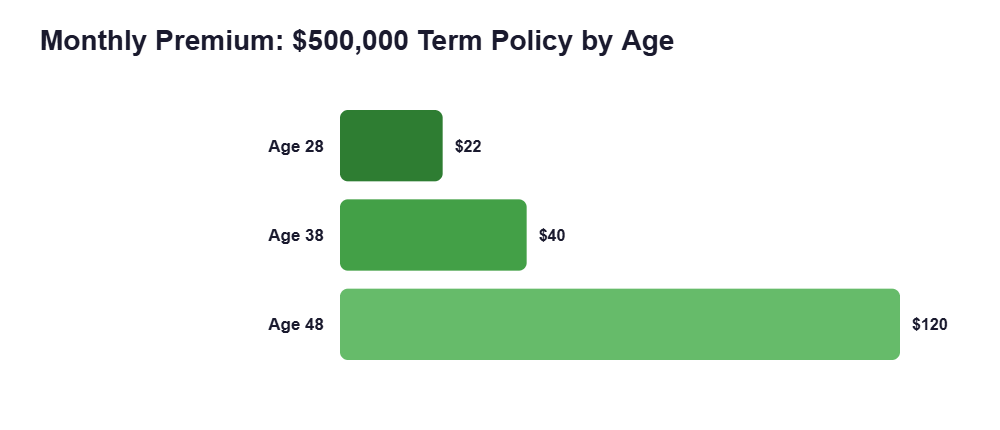
Life insurance premiums are determined primarily by your age and health. The younger and healthier you are when you buy, the lower your locked-in premium for the entire policy term. A 28-year-old in excellent health might pay $22/month for a 30-year, $500,000 term policy. A 38-year-old in the same health might pay $40/month for the same coverage. A 48-year-old might pay $120/month.
That $22/month locked in at 28 stays $22/month for 30 years — even as you age, take on more financial responsibilities, and potentially develop health conditions that would have increased your rate if you’d waited. The cost of waiting isn’t just the extra premium; it’s the compounding difference over decades.
When Do You Actually Need Life Insurance?
Not every young professional needs life insurance immediately. The trigger points are financial dependents and obligations:
- You get married: Your spouse likely depends on your income, even partially. A death benefit ensures they’re not financially devastated.
- You buy a home: Your co-borrower is responsible for the mortgage if you die. Life insurance covers this obligation.
- You have children: This is the clearest trigger. Young children are fully financially dependent on you — often for 18+ years.
- You co-sign debt: Student loans, business loans, or other co-signed debt becomes the co-signer’s problem if you die without coverage.
If you’re single, renting, no dependents, and no co-signed debt? Life insurance is less urgent — though locking in a low rate while young and healthy is worth considering even before you strictly need it.
How Much Coverage Do Young Professionals Need?
The right amount depends on your situation, but here are benchmarks for common young professional scenarios:
- Married, no children, dual income: $250,000–$500,000 each. Enough to cover debt, give your spouse time to adjust financially, and cover final expenses.
- Married with one child: $500,000–$750,000. Cover mortgage, income replacement for 10+ years, and education costs.
- Married with two children, sole breadwinner: $1,000,000–$1,500,000. Full income replacement for 15–20 years plus education costs.
- Single with student debt: Enough to cover co-signed debts plus final expenses — often $50,000–$150,000. Private student loans are typically discharged at death, but federal loans co-signed by a parent are not.
What Term Length Should You Choose?
Match the term to your expected period of peak financial vulnerability:
- No children yet, buying soon: 30-year term. Covers the entire period from early family formation through children leaving home.
- Children already in the picture: Calculate years until your youngest is financially independent. A 30-year-old with a newborn might choose a 25-year term; a 35-year-old with a 10-year-old might choose a 15-year term.
- Large mortgage, no children: Match the mortgage term — 15 or 30 years.
What to Skip
Insurance agents may offer add-ons and alternatives. Here’s what most young professionals can skip:
- Whole life insurance: The premium is 10–15x higher than term for the same coverage. The cash value component grows slowly and the returns don’t compete with investing the premium difference in a robo-advisor. For wealth-building young professionals, term + investing is almost always superior.
- Return-of-premium riders: These refund your premiums if you outlive your term, but they cost significantly more. The extra cost invested would typically produce a larger return than the refund.
- Accidental death riders: You need coverage regardless of how you die — don’t pay extra for the specific circumstance of an accident.
The Application Process
Applying for term life insurance is straightforward. You’ll complete an application covering health history, lifestyle (smoking, high-risk hobbies), and financial information. Depending on the insurer and coverage amount, you may need a paramedical exam — a brief appointment where a technician takes blood pressure, collects blood and urine samples, and measures height/weight. Results go directly to the insurer.
With accelerated underwriting (offered by Haven Life and others), many applicants under 45 with coverage under $1 million can skip the exam entirely and get approved within days.
Frequently Asked Questions
At what age should a young professional buy life insurance?
As soon as you have a financial dependent or significant debt that another person would inherit. For most people, this means buying around the time of marriage, home purchase, or having a first child. If none of those apply yet, buying in your late 20s while still healthy locks in a low rate before any health conditions emerge.
What if I’m healthy and young — can I get a low rate?
Yes — this is precisely when life insurance is cheapest. Insurers reward excellent health and young age with their lowest ‘preferred plus’ or ‘super preferred’ rate classes. A healthy 28-year-old non-smoker can get 30 years of coverage for the cost of a single dinner out each month.
Does my employer’s group life insurance count?
Group life (typically 1–2x salary) is a supplement, not a substitute. It doesn’t follow you if you leave your job, and the coverage amount is almost always insufficient for a family with a mortgage and children. Treat employer coverage as a bonus and maintain a separate personal policy.
Should I get life insurance before or after buying a home?
Ideally, before — or at the same time. Once you close on a mortgage, you have an obligation your family would inherit. Getting covered at the same time you take on the debt ensures there’s never a gap in protection. Some lenders offer optional mortgage protection insurance, but a separate term policy is usually better value and more flexible.
Is it worth getting life insurance if I’m single with no dependents?
It’s not urgent, but there’s a case for it: locking in a low rate while young and healthy. If you plan to have a family in the next few years, applying now guarantees your rate before any health changes occur. The cost is low enough that many financial planners recommend it even for singles who expect to have dependents within 5 years.
Already investing and want to compare robo-advisor options too? See our Best Robo-Advisors 2026 comparison for the full lineup.
The Cost of Waiting, Added Up
The per-month numbers above ($22 at 28, $40 at 38, $120 at 48) are easy to shrug off individually. They look very different once you total what each starting age actually costs over the years you’d realistically hold the policy:
| Age at purchase | Monthly premium | Years to typical coverage end (~age 58) | Total premiums paid |
|---|---|---|---|
| 28 | $22/mo | 30 years | $7,920 |
| 38 | $40/mo | 20 years | $9,600 |
| 48 | $120/mo | 10 years | $14,400 |
Waiting a decade to buy the same $500,000 in coverage doesn’t just cost more per month — it costs more in total, even though you’re paying for fewer years. That’s the part most people miss: the math isn’t “small monthly savings, add up over time.” It’s “you pay almost twice as much overall for buying later, on top of going without coverage during the years you didn’t have it.”
My Honest Take
The reason people put this off isn’t usually cost — it’s that nothing forces the decision. There’s no bill that arrives if you don’t have life insurance, no late notice, no obvious consequence in the short term. It’s a classic “important but not urgent” item that loses to literally everything with a deadline attached. The fix isn’t willpower, it’s removing the decision: get a quote this week, even if you don’t buy immediately. Once you know your actual rate, the abstract task becomes a concrete number you can say yes or no to — and most people who get to that point go ahead and lock it in.